Updated 19 October 2026.
A DHCP lease is the period for which a device is allowed to use an automatically assigned IP address. Changing that period can help manage address availability on a network. It does not increase Wi-Fi bandwidth or directly make an internet connection faster.

What happens when a lease runs out?
A connected client normally tries to renew its lease before it expires. A successful renewal can keep the same address. The DHCP specification describes lease renewal; expiry is not a scheduled instruction to assign every device a different address.
For the wider process, see our DHCP protocol guide. The home router often acts as the DHCP server, but an ISP gateway, separate firewall or another server may do that job instead.
Find the setting on the actual DHCP server
- Confirm which device supplies addresses on the local network.
- Open its administration page using the address in its own documentation or your network settings.
- Sign in and find the LAN or DHCP Server section.
- Record the current address pool, lease value and units.
- Change only the intended lease setting and save it.
For example, the TP-Link Archer VR300 guide documents an Address Lease Time setting. Its menu and permitted values are specific to that router and firmware; do not assume every model uses the same screen or units.
Choose a period for the network’s needs
| Situation | Practical approach |
|---|---|
| Stable home network with enough addresses | Keep a working default unless there is a specific problem. |
| Many short-term visitors and a small address pool | Review pool capacity and whether a shorter lease is appropriate. |
| A printer or NAS needs a predictable address | Consider a DHCP reservation instead of extending every lease. |
| A managed work network | Let its administrator set the DHCP policy. |
A shorter lease can make unused addresses available sooner, but it also increases renewal activity. A longer lease can reduce that activity while keeping departed clients’ addresses reserved for longer. There is no single best duration for every network.
What existing devices will do
Do not expect all clients to adopt the new value instantly. Their current leases and next renewal determine when they receive updated settings. A brief reconnection or a documented client renewal can help test one device, but it may interrupt an active connection.
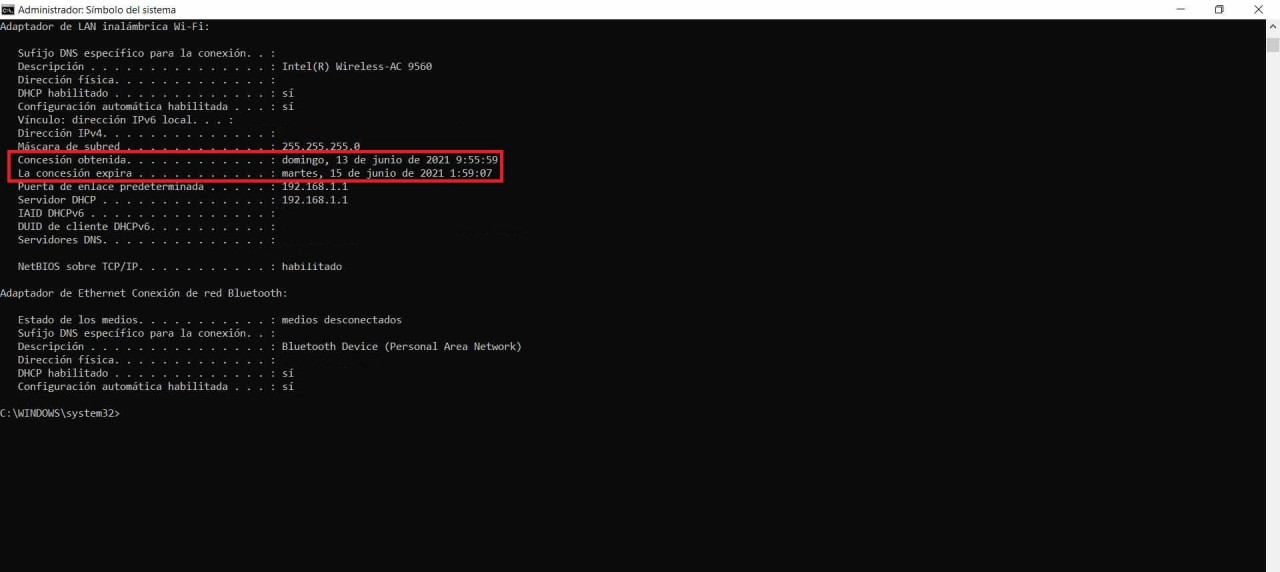
On Windows, ipconfig /all can show DHCP and lease details for an adapter. Commands such as release/renew affect that client; they do not change the router’s lease policy. Avoid releasing the connection you are using for a remote administration session.
Check and roll back
Verify that one test device still receives a valid address, gateway and DNS settings. If unexpected problems appear, restore the recorded lease value. Do not enable a second DHCP server or change the address pool merely to shorten a lease.
FAQs
Will a shorter lease speed up the internet?
No. It changes address allocation timing, not the capacity of the internet connection.
Does renewal always give a new IP address?
No. A device may renew the address it already has.
Why is there no lease setting in my router?
The router may hide it or another device may be acting as the DHCP server.
Is a reservation the same as a long lease?
No. A reservation maps a chosen address to a particular device within the server’s configuration.